
Macro Trends & Geopolitics: Navigating Global Risks and Market Shifts

By Neal Topper, Infinite Speakers Agency June 10, 2026
As economies grow more interconnected macro trends and geopolitical developments pose both hazards and openings for companies operating internationally. For corporate leaders a clear grasp of these forces is essential to navigate risk and identify strategic advantages. This article lays out key definitions, the primary risk drivers, and how recent geopolitical events reshape markets. You’ll find actionable perspectives on incidents between 2023 and 2025, the role of expert advisors in risk management and practical strategies companies can deploy to sustain growth under uncertainty.
What Defines Global Economic Risk in Today’s Geopolitical Environment?
Global economic risk emerges where geopolitical shifts, monetary policy, and trade dynamics intersect to create uncertainty. Changes to trade deals, national economic policies, and global sentiment can ripple across sectors from finance to manufacturing altering demand, costs, and investment plans. Recognizing how these forces connect helps leaders prioritize vulnerabilities and seize openings as they arise.
To fully understand global economic risk today we must consider the rapid pace of change and the multiplicity of factors driving uncertainty. Factors such as rising nationalism, protectionist policies, and emerging conflicts often converge, amplifying market volatility. Businesses must therefore adopt a holistic systems thinking approach to risk assessment, factoring in not only immediate triggers but also longer-term geopolitical and economic trends.
The integration of advanced technologies and data analytics is enhancing the ability of companies to detect early warning signals. These tools enable real-time monitoring of political developments, market sentiment shifts, and policy changes, offering leaders a strategic advantage in preempting risks before they escalate.
Which Global Risk Factors Most Affect International Markets?
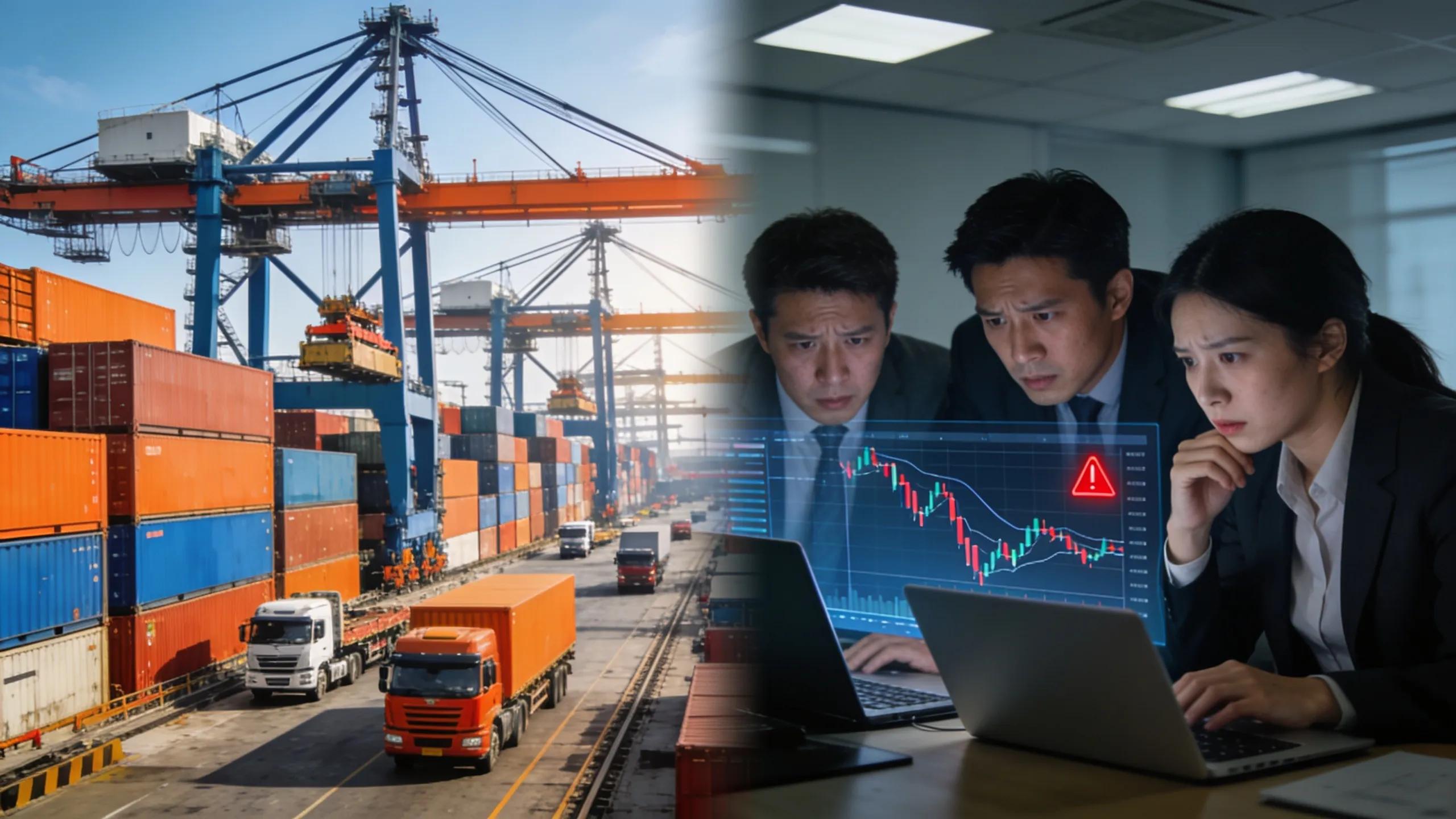
Several risk drivers are shaping markets right now:
- Trade tensions: Protracted disputes can disrupt supply chains, raise costs, and increase pricing uncertainty.
- Supply-chain realignment: Shifts in sourcing and logistics strategies can materially change resilience and margins.
- Monetary policy: Central-bank moves on rates and currency interventions can trigger rapid market repricing.
Staying current on these dynamics allows business leaders to align decisions with strategic priorities. For a deeper look at central-bank influence, see resources on monetary policy.
In addition to the primary factors above several secondary but increasingly influential risk drivers merit attention:
- Climate change policies: New regulations and international agreements on climate action can alter industry costs and investment needs.
- Technological disruption: Cybersecurity threats and innovations such as blockchain or AI impact operational risk and competitive dynamics.
- Demographic shifts: Changing population dynamics affect labor markets, consumption patterns, and geopolitical power balances.
Leaders must integrate these emerging trends into their risk frameworks to maintain a competitive edge and anticipate challenges proactively.
How Do Economic Sanctions and Political Instability Reshape Risk Profiles?
Sanctions and political unrest directly reshape market access and operational risk. When sanctions restrict trade or capital flows, affected industries face curtailed markets and limited inputs. Political instability often creates currency volatility and investment risk, compounding operational uncertainty. A careful, scenario based approach to sanctions exposure helps organizations identify weak points and prepare contingency plans. For practical guidance, explore our materials on economic sanctions.
Furthermore, the complexity of sanctions regimes is increasing with multilayered restrictions from different jurisdictions complicating compliance efforts. Companies must invest in specialized legal and compliance expertise to navigate these challenges effectively. Failure to comply can result in severe financial penalties and reputational damage.
Political instability also manifests in more localized forms such as social unrest, government transitions, or changes in regulatory environments each influencing operational continuity and strategic planning. Risk mitigation requires detailed country level analysis and active scenario planning, integrating both quantitative data and qualitative intelligence from geopolitical experts.
How Do International Geopolitical Events Drive Market Shifts and Investment Choices?
Geopolitical events ripple through markets and investor behavior, often triggering sector specific reallocation and shifts in risk appetite. Policy choices can dent consumer confidence, alter capital flows, and change demand patterns forcing investors and executives to adjust asset mixes and operational plans. Anticipating these linkages helps leaders make informed, timely decisions.
What Notable Geopolitical Incidents from 2023 to 2025 Have Mattered Most?
Recent developments including rising tensions among major powers and pivotal election outcomes in key markets underline the fragility of the current environment.
Notable effects include:
- Renegotiated trade arrangements between the U.S. and China in 2023, which raised questions about the reliability of long-standing supply chains.
- Political shifts across Europe that altered investment priorities, especially within the energy industry.
- New rounds of sanctions on selected countries, which disrupted global oil flows and affected pricing and availability.
These events highlight why businesses must remain agile and data-driven. Sector-specific awareness—for example, in the energy sector is crucial for sound decision-making.
Besides these headline incidents, other geopolitical factors have notably influenced markets, including:
- Rising tensions in the Indo-Pacific region, which have implications for global trade routes and defense spending.
- Post-pandemic shifts in global migration, affecting labor availability in developed economies.
- Rapid technological competitions between major powers, influencing supply chains for critical components such as semiconductors.
Proactively tracking such multidimensional geopolitical developments enables organizations to revise investment portfolios and operational footprints to optimize risk-return profiles.
How Do Trade Conflicts and Energy Geopolitics Affect Global Supply Chains?
Trade disputes and energy geopolitics have meaningful impacts on global logistics and costs. Rising tariffs and barriers force firms to rethink sourcing and distribution networks.
- Supply chain impact: Disruptions create delays, raise input costs, and can erode margins if not managed proactively.
- Economic consequences: Volatile energy prices driven by geopolitical events change operating costs and capital allocation decisions.
Addressing these challenges requires both tactical contingency plans and strategic supply?chain redesign.
Effective supply chain risk management now includes greater diversification of suppliers, investments in local or regional manufacturing capabilities, and integration of digital monitoring tools to enhance visibility and responsiveness. Companies are also partnering with logistics providers invested in geopolitical intelligence to anticipate disruptions and reroute shipments as needed.
Energy sector volatility increasingly persuades firms to consider sustainability factors and energy security in their sourcing and operational decisions. This has accelerated adoption of renewable energy sources and energy efficient technologies in manufacturing and logistics.
Who Are the Leading Experts on Geopolitical Risk Management and Market Trends?
Several practitioners and analysts specialize in geopolitical risk, offering practical insights for corporations navigating uncertainty. Professional keynote speakers and subject-matter experts translate complex trends into actionable guidance that leaders can use to inform strategy and board-level decisions.
Which Keynote Speakers Focus on Economic Sanctions and Political Risk?
Speakers with deep experience in sanctions, regulatory risk, and political analysis provide invaluable context for organizations operating across borders. Infinite Speakers Agency represents thought leaders who regularly brief corporate audiences on geopolitical risks and mitigation approaches—helping teams understand nuance and prepare effective responses.
These experts often have backgrounds in international law, government policy, intelligence analysis, or global finance, bringing nuanced perspectives that clarify rapidly evolving risk landscapes. Their presentations combine case studies, scenario evaluations, and practical compliance advice tailored to industry-specific challenges.
- Ron Insana: The Economy & Geopolitics in 2026: Everything Everywhere All at Once
- Taylor St. Germain: Gearing Up for 2026
- Geoff Colvin: Where Is This Economy Headed?
- Alex Chausovsky: Economic and Labor Market Update
How Can Event Planners Leverage Expert Insights for Corporate Association Events?
Event planners can amplify learning and decision-making by bringing experts into the conversation. Engaging seasoned speakers enables organizations to:
- Frame informed discussions on risk and resilience strategies.
- Turn expert analysis into practical actions for leadership teams.
- Build an organizational mindset that recognizes international drivers affecting operations and growth.
Integrating expert perspectives into corporate events accelerates understanding and supports better strategic choices.
Beyond keynote presentations, workshops and panel discussions led by geopolitical risk experts foster interactive learning environments, enhancing participant engagement and internalizing complex concepts. These programs can be tailored to specific sectors or geographic focuses, increasing relevance and practical value.
What Strategies Best Mitigate Risk and Manage Market Volatility?
Companies that navigate geopolitical volatility successfully combine adaptive practices with disciplined planning. Core strategies include:
- Embrace disruption: Design operations and products to be flexible so the business can pivot when conditions change.
- Integrate corporate finance: Align capital allocation and hedging with geopolitical scenario analysis to protect balance sheets.
- Leverage technology: Use data and analytics to detect trends early and stress-test strategic options.
These approaches link geopolitical foresight to concrete risk-reduction measures, improving resilience and long-term performance.
Geopolitics, Market Volatility, and Business Mitigation Strategies
Global geopolitical uncertainties are increasingly fuelling volatility in the world’s financial and economic markets. This research aims to analyse the impact mechanisms of geopolitical events—such as military conflicts, economic sanctions, and diplomatic tensions—on market volatility and to formulate effective mitigation strategies for global businesses. THE IMPACT OF GEOPOLITICS ON MARKET VOLATILITY: MITIGATION STRATEGIES FOR GLOBAL BUSINESSES, 2025
Applied consistently, these strategies strengthen an organization’s capacity to respond when markets move unexpectedly.
Which Risk-Assessment Frameworks Support Geopolitical Decision?Making?
Established frameworks help companies structure their analysis and planning. Common tools include:
Used together these frameworks give leaders a structured way to turn external signals into prioritized actions.
How Do Businesses Adapt to Emerging Market Trends During Geopolitical Shifts?
Adaptation often comes down to people and process: invest in workforce capabilities, tighten internal communications, and align incentives with strategic agility. Training and cross-functional collaboration improve responsiveness, while clear communication ensures decisions are executed consistently across the organization. These practices position companies not just to survive change, but to capture opportunities that follow.
To expand on this developing specialized knowledge among employees about geopolitical contexts builds institutional intelligence and reduces decision lag. Leadership must foster a culture encouraging agility, innovation, and continuous learning.
In addition, companies are increasingly adopting advanced technology platforms for collaboration and knowledge sharing, enabling geographically dispersed teams to respond cohesively to emerging risks.
By combining disciplined analysis of global trends with expert insight and proven frameworks, leaders can navigate macro trends and geopolitical risks with greater confidence. Bringing subject-matter experts into planning conversations and embedding resilience into operations are practical steps toward a more secure, forward-looking posture.
Ultimately, organizational resilience is enhanced not only through external intelligence and strategic planning but through internal culture, systems, and leadership commitment. Companies that embed adaptive capabilities at every level are better positioned to turn uncertainty into opportunity in an increasingly complex global landscape.
Call or text Neal Topper at (720)498-3275 or email neal@infinitespeakers.com to schedule a discovery call to learn more about your organization and discuss Keynote Speaker ideas and recommendations.